At home in the UK, we have just about everything automated using a Raspberry Pi and a package called Home Assistant. Without going into too much detail, The Pi has a USB stick that talks to things like bulbs, plugs, sensors and the heating. Lights come on when the light level drops to a certain value but only if motion is detected in the room. If there is no motion, the light turns off after a few minutes.
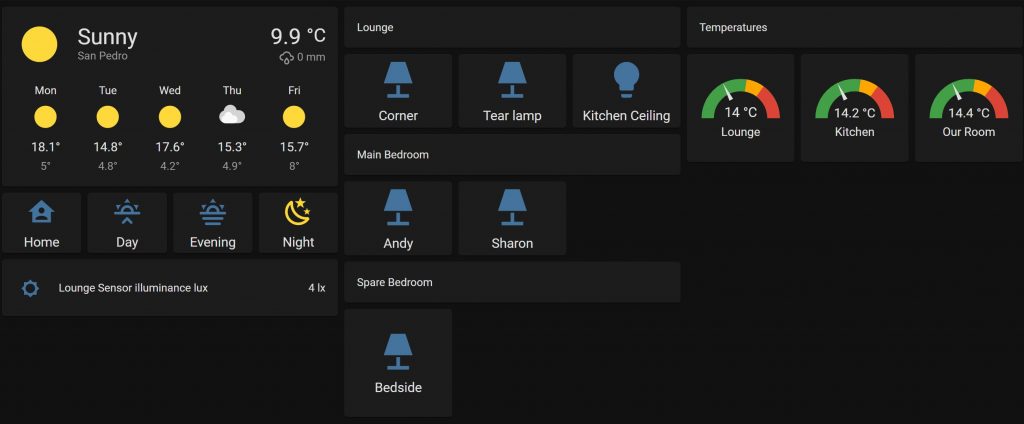
I’m slowly adding this to the house in Spain. This means that I can monitor the temperature of different rooms, turn lights on or do something like turn on a heater in the bedroom when we land at Malaga so that it’s warm in there if we arrive late at night. There’s also a camera on the roof so that we can check out the view when we’re at home and we’re missing it. And cameras in in various other places for security.
This is the sensor for the lounge that monitors the temperature. You can see that the room starts to warm up in the morning and then cools down as the sun moves round a bit in the afternoon. Then, probably around 7.00pm we lit the woodburner. It then starts to cool down again at about 10.00pm when we let the woodburner go out.
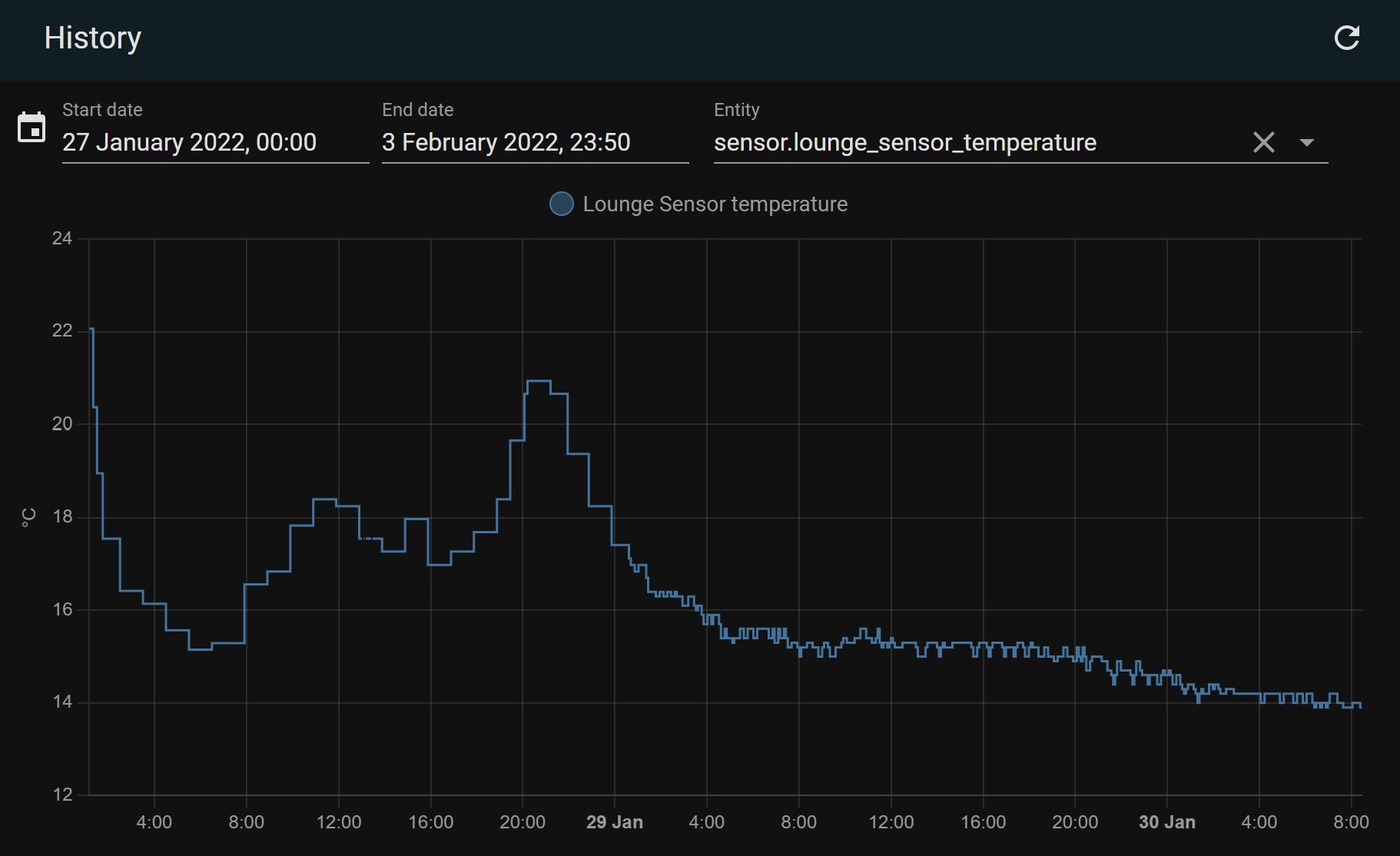
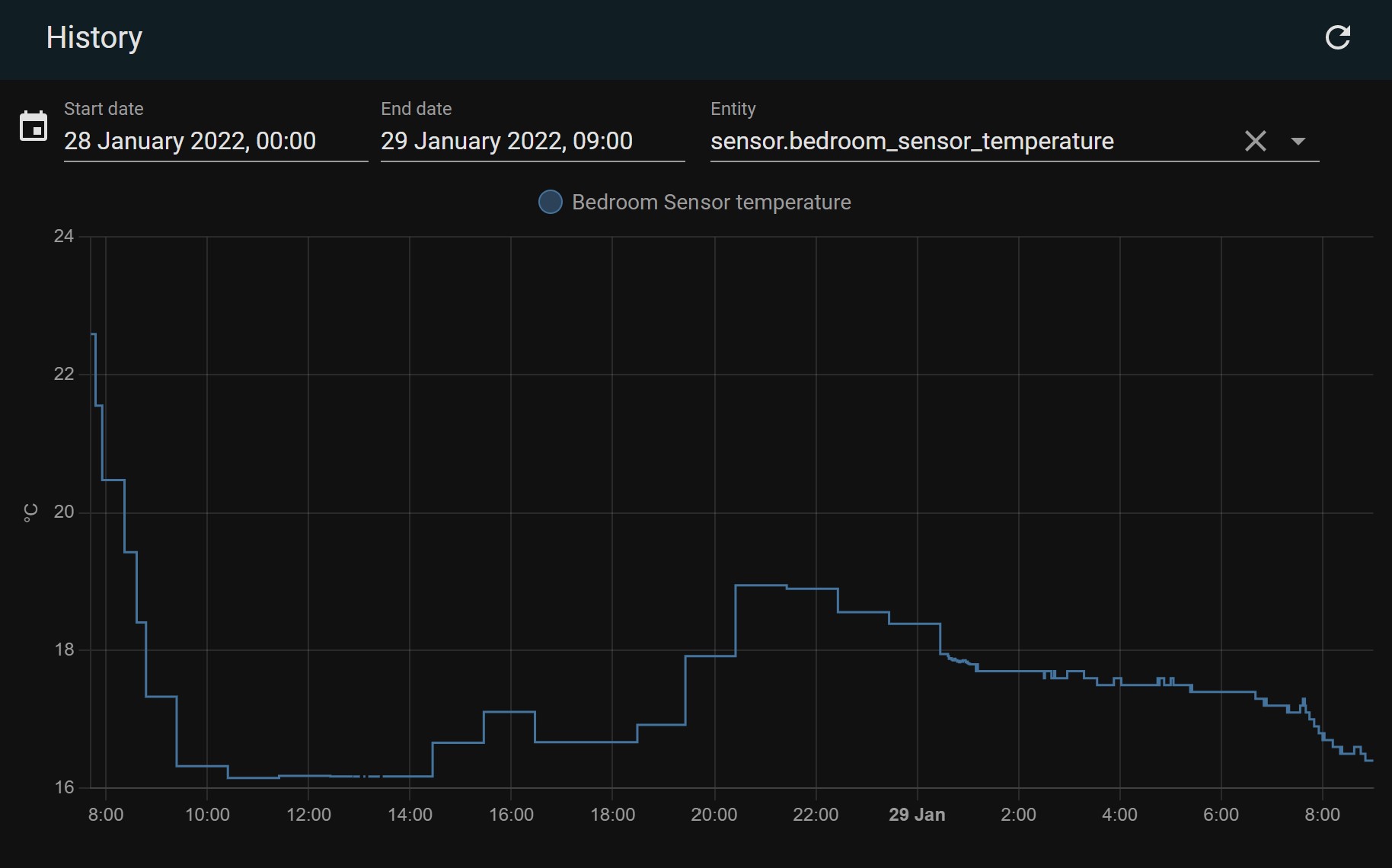
Why do we do this? Well, it’s a bit of a hobby of mine but it is useful as well. As mentioned elsewhere, Olvera can get cold at night. What I wanted to see was how much the woodburner warms the bedroom – where the flue runs up through the bedroom and out of the roof. If you use the slider you can switch between the lounge and bedroom temperature.
This is the view from the roof. It’s actually just at the top of the stairs before the steps to the roof terrace. Our terrace is the other side of that white wall. I’ve got a new camera to put up here but I need to wait for some electrics to be moved as the one on there at the moment uses a battery with a solar charger.
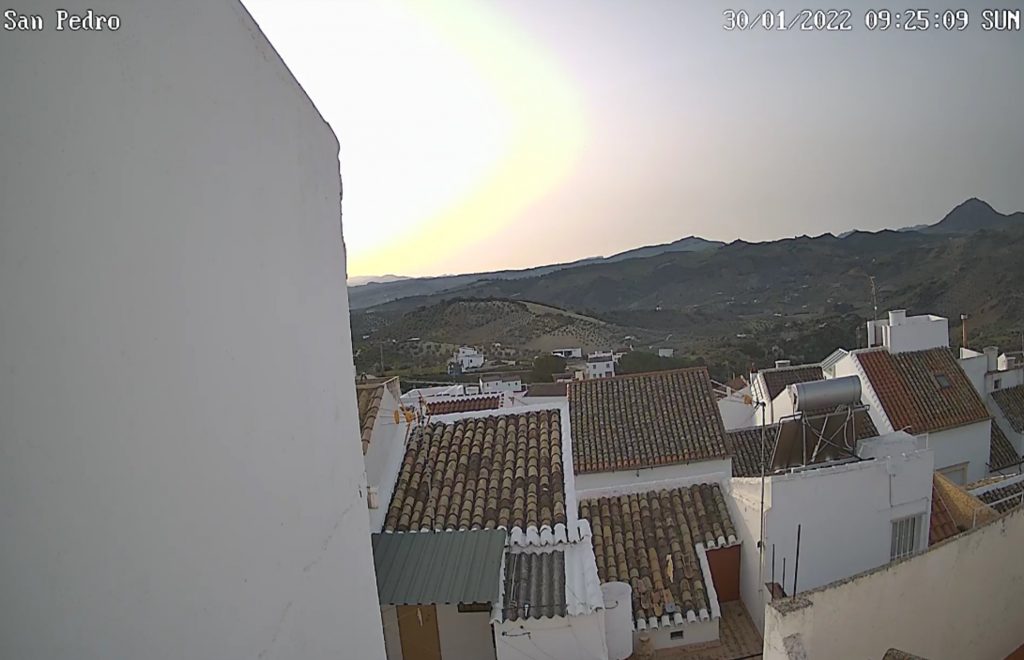
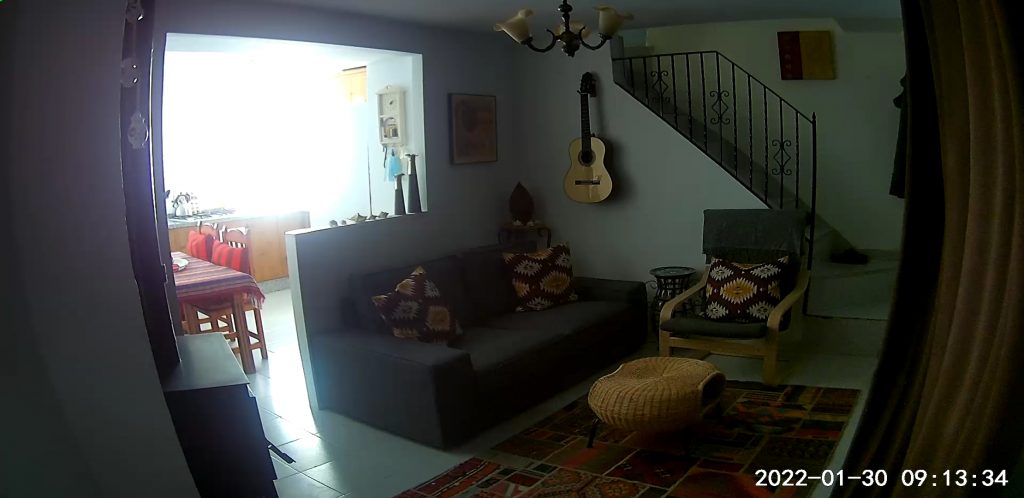
And lastly, the cameras. These detect motion and sound. These have 2 purposes. Firstly, they allow us to check in and say “Ahhhh… in a week’s time we’ll be sitting there”, or “This time last week we were sitting in front of the woodburner there”. But they also act as a security monitor. They’re VERY good at detecting movement. If the sensitivity is set high then they’ll detect a moth flying past. At night they switch to infrared so you can still see everything. If the house is in away mode then the cameras are active. If someone goes in, I’m notified within seconds and the alarm goes off which is an extremely loud and painful 120dB siren. Not bad for a few £20 cameras!
There is one last piece of technology… the seismograph. I installed that on this visit to watch seismic activity in the area. More on that one later.